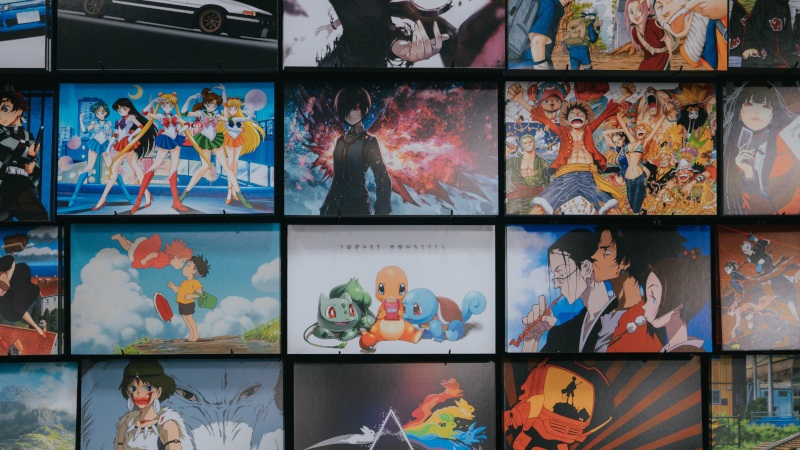
Anime has become one of the most tested art styles in AI image generation, and the gap between the anime art style prompts that worked two years ago and what these tools produce now is hard to overstate. When OpenAI launched GPT-4o image generation in March 2025, the Studio Ghibli trend that followed was so overwhelming that OpenAI had to introduce rate limits, with CEO Sam Altman saying their "GPUs are melting" from demand. Midjourney has surpassed 10 million active users generating over 500 million images daily. Anime is a big part of why those numbers look the way they do.
Most articles on anime art style prompts either list generic prompts without testing them, or focus entirely on Midjourney, which requires a paid subscription and a learning curve most casual users don't want. I tested eight anime AI art styles across Meta AI, ChatGPT, and Grok (xAI's Grok Imagine) using prompts built around specific style keywords. I also tried Gemini, and the results came out weaker across most of these styles, so the examples below lean on the three tools that performed best. The prompts still work as a starting point in Gemini if that's your tool, and there's a quick adjustment for it in the FAQ. Some styles came out better than I expected. Others put up a real fight.
Retro Anime Art Style (90s Anime)
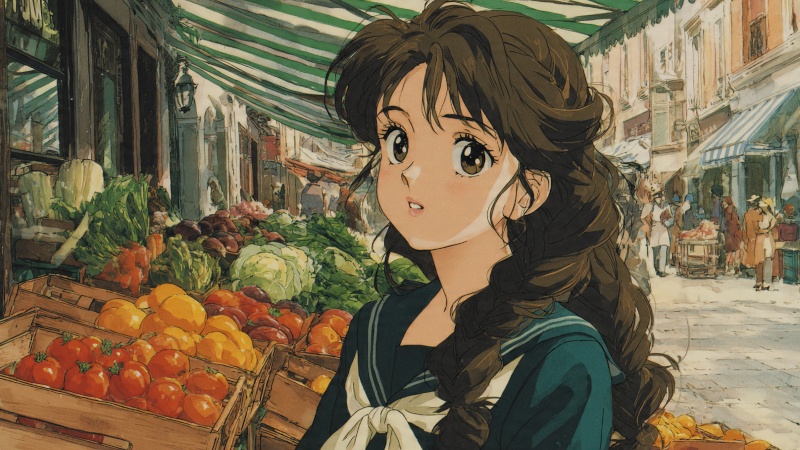
Of all the anime art style prompts I tested, the retro '90s style surprised me most. Meta AI produced something I genuinely didn't expect from a free tool. It looked like a still pulled from a Marmalade Boy or Fushigi Yuugi episode, with that hand-drawn line quality, natural grain, and the color depth you only see in '90s cel animation. It generated four slight variations on the first run, and picking between them was genuinely difficult.
ChatGPT produced a decent result with the same prompt, but Meta AI's output had depth that was hard to ignore. The market background blurred naturally behind the character, the braids had real texture, and the whole thing felt like a broadcast frame rather than a generated image.
Prompt:
Teenage girl with large expressive eyes and long braided hair, sailor school uniform, outdoor market setting in 1990s Tokyo. 90s anime aesthetic, cel-shaded flat colors, retro anime screencap style, VHS color palette with slightly washed-out tones, subtle film grain, hand-drawn linework, warm nostalgic atmosphereWhat I noticed: Adding "anime screencap" to the prompt is the strongest retro signal I found. It tells the generator to treat the output as a still from an actual broadcast, which shifts the color depth and composition toward the right era. That same era-specific keyword logic carries well beyond anime; it's exactly what makes these 16-bit retro RPG character sprite prompts land too.
Cyberpunk Anime Art Style
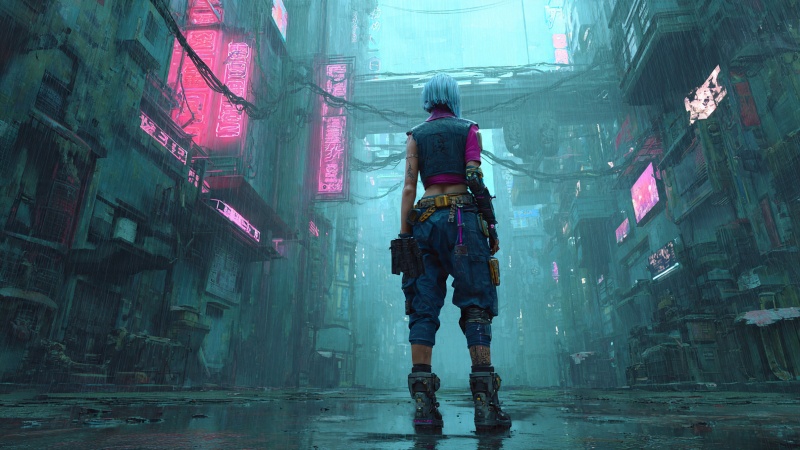
Meta AI handled this style without much resistance. The fog layering between buildings, the neon reflections on wet pavement, the overall sense of atmospheric depth all came together in a way that felt cinematic. The scene had real tension to it, like a frame from a film rather than a prompted image.
Results from other generators came out cleaner and flatter, losing the gritty atmosphere that defines cyberpunk anime. Meta AI seemed to have strong training data for this style, and it showed.
Prompt:
Female hacker with short silver hair and cybernetic eye implant, standing in a rain-soaked neon alley, holographic advertisements reflected on wet pavement. Cyberpunk anime style, neon color palette in electric blue and deep magenta, detailed mechanical enhancements, volumetric fog, synthwave aesthetic, gritty atmosphere, dynamic composition, 4KWhat I noticed: Specifying "neon as primary light source" rather than just "neon lights" pushed the output toward the genre's signature look more reliably. The direction of the light source matters more than the mere presence of neon in the scene.
Shonen Art Style
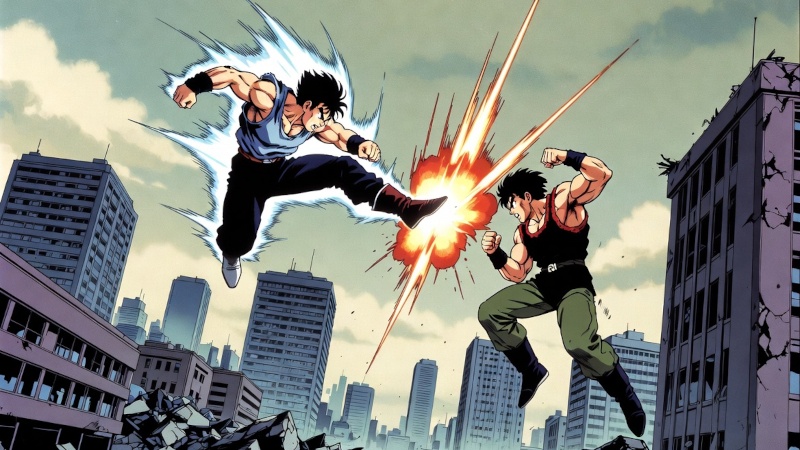
This was the hardest anime art style prompt to get right, and I'd be honest with anyone trying it: expect to run it multiple times. Two problems came up consistently across every generator I tested.
First, the generators kept inserting recognizable shonen characters without being asked. Even when the prompt described completely original characters, the generators kept producing characters that looked like they belonged to existing franchises. Second, the fighting poses came out forced, with characters barely making contact despite a clear combat description. The generators compensated by adding an energy blast in the background rather than depicting actual impact.
Grok produced the cleanest result of everything I tried, though it had the same contact problem. The cel-shaded flat colors were authentic to the style, and the composition read clearly as a fight scene, but it still felt more like two characters posing near each other than actually fighting.
Prompt:
Two fighters mid-air above a destroyed cityscape, speed lines, energy explosion between them. Classic shonen anime style, bold confident linework, dynamic diagonal composition, cel-shaded with strong value contrast, speed lines radiating outward, intense determined expression, masterpiece qualityWhat I noticed: It seemed like most generators had some kind of restriction around depicting direct combat contact. Working around this means leaning into the energy, composition, and speed lines rather than physical impact, which is actually how a lot of real shonen art handles it anyway.
Studio Ghibli Art Style
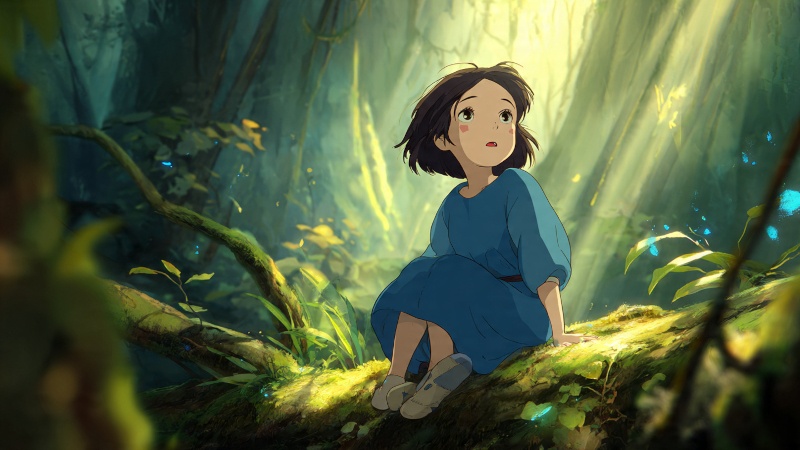
Out of all eight styles, this one performed most consistently across every generator I tested. The training data is clearly strong across the board, and each tool captured the core visual elements with only slight differences in brushstroke softness, shading warmth, and lighting direction.
Meta AI produced my favorite result. The light rays through the forest canopy, the moss texture on the log, and the tiny glowing particles floating through the scene all looked like a production still from a film that doesn't exist yet.
Ghibli's visual style is so widely documented and referenced online that the training data runs deep across every major generator, which explains the consistency I saw across all three tools I tested. Even so, ChatGPT blocked my prompt on one attempt with a third-party content similarity error. Removing the direct "Ghibli" reference and keeping descriptive style keywords got through without issues.
Prompt:
Young girl with short dark hair, blue dress, sitting on a mossy log in a primeval forest, looking upward at beams of light through the canopy. Studio Ghibli inspired style, soft rounded character features, warm diffused lighting, bioluminescent flora, hand-drawn aesthetic, rich natural color palette, gentle melancholy mood, painterly brushstrokes, detailed environmental storytellingWhat I noticed: If ChatGPT blocks the prompt, replace "Studio Ghibli inspired style" with "painterly watercolor animation style, soft natural lighting, hand-drawn backgrounds". The environment description matters as much as the character here. Giving the generator specific environmental language, like moss, ancient wood, and light filtering through leaves, produces noticeably richer backgrounds than a generic setting description.
Shojo Art Style
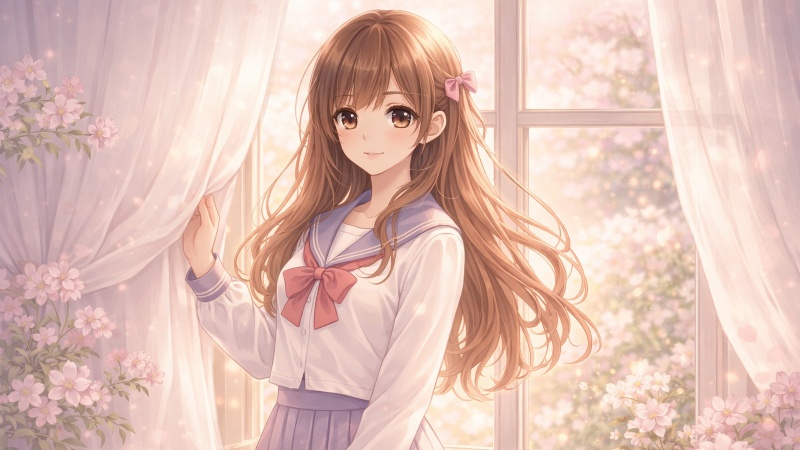
ChatGPT handled this anime art style better than I expected, given its mixed results on other styles. It landed firmly in novel cover art territory, with a soft pastel palette, cherry blossom window scene, warm light, and a mood that felt genuinely shojo. It carried that nostalgic quality typical of shoujo manga without veering into the flat look ChatGPT sometimes produces elsewhere.
Prompt:
Girl in school uniform standing by a window, sunlight through curtains, gentle expression. Elegant shojo art style, soft pink and lavender palette, detailed hair with flowing movement, large sparkling eyes, floral background elements, clean romantic atmosphere, high qualityWhat I noticed: The pastel palette did most of the heavy lifting here. Keeping the colors soft, pink, lavender, and warm white pushed the output firmly into shojo territory without needing many other style signals. Darker or more saturated colors pulled the result away from shojo immediately, regardless of what else was in the prompt.
Seinen Art Style
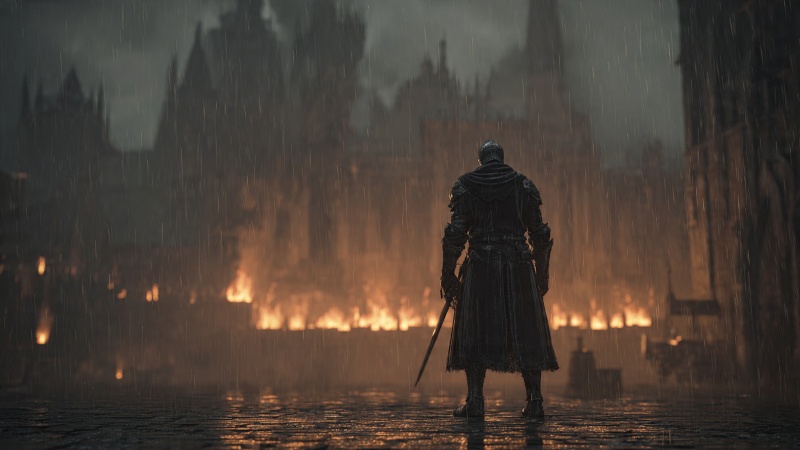
This style drifted in a different direction than shonen. Across every generator I tested, seinen output moved toward Western fantasy concept art rather than anime. The results were striking, dark, foreboding, cinematic, and genuinely atmospheric, but they leaned closer to Dark Souls artwork than to Berserk or Vinland Saga.
Meta AI produced the most interesting result. The fire and rain worked well together, and the armored figure had real weight and presence. The image captured the emotional tone of seinen accurately, even though the visual style had drifted from anime into concept art territory.
Anchoring the prompt with a specific show reference helped more here than for any other style. "Berserk art style" or "Vinland Saga aesthetic" kept the output closer to anime than "seinen art style" alone.
Prompt:
Lone warrior in dark armor, standing in heavy rain, medieval city burning in background, torch light casting long shadows. Mature seinen anime style, realistic proportions, detailed shading, muted desaturated palette, atmospheric fog, cinematic composition, gritty textures, masterpieceWhat I noticed: Seinen sits close enough to Western dark fantasy illustration that generators need a stronger anchor to stay on the anime side of that line. Show-specific references work better here than for any other style on this list.
Chibi Art Style
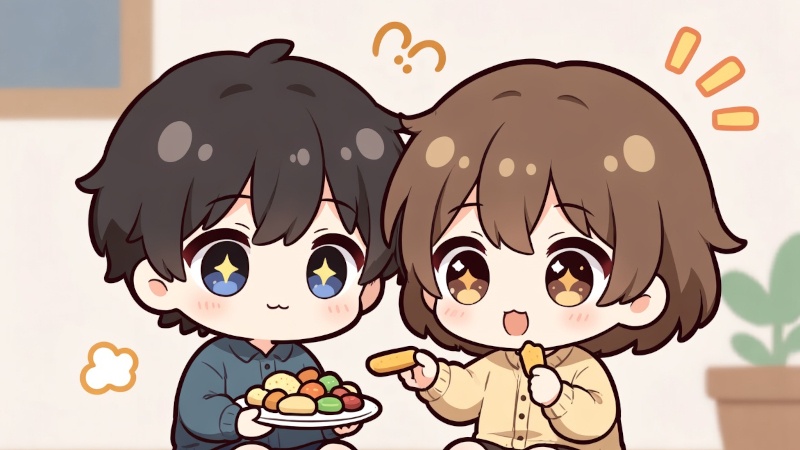
Chibi was the most straightforward style to generate across all three generators, with one exception. Grok produced the strongest result by a clear margin. The heavy outlines, floating emotion symbols above the characters, and the way they sit together all read like a filler scene pulled from an actual anime episode. It felt less like a generated image and more like something a studio animator would produce between plot-heavy scenes.
ChatGPT produced a warmer, more polished result that reminded me of printed school notebook cover art, the kind you'd find in a stationery shop. The soft hoodie colors and small heart details gave it a cozy, familiar quality. It's charming, just not quite anime in the same way Grok's version was.
Meta AI was the outlier. Across multiple attempts, it kept producing kawaii blob characters rather than human chibi figures. The proportions leaned creature-like rather than the classic oversized head and small body ratio that defines the style.
Prompt:
Two friends sitting together sharing snacks, oversized heads, tiny rounded bodies, big sparkly eyes, simple pastel background. Chibi anime style, super deformed proportions, kawaii expression, soft flat colors, clean simple linework, cute sticker style, high qualityWhat I noticed: Specifying "super deformed proportions" and "oversized heads" is what keeps results from drifting into generic cute character territory. Without those constraints, generators tend to produce regular anime characters with slightly large eyes rather than true chibi figures.
Mecha Art Style
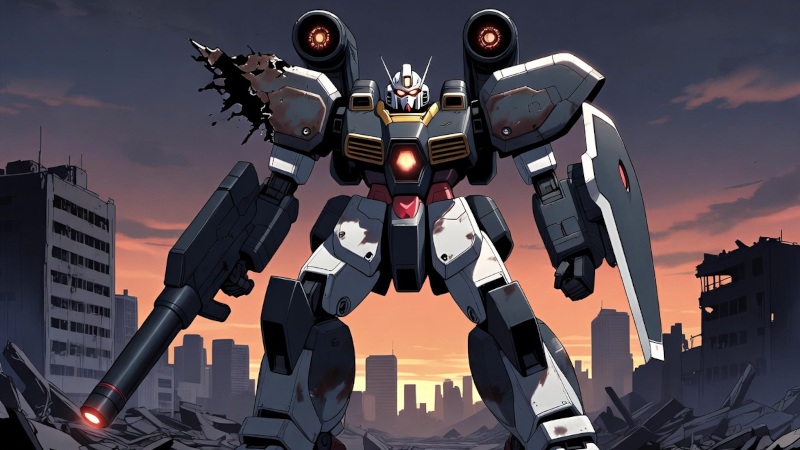
Mecha produced the most varied results of all eight styles I tested. Each generator interpreted the prompt differently enough that comparing them side by side was genuinely interesting.
Grok came closest to actual Gundam anime art. The panel lines, battle damage, and cel-shaded coloring all read as anime rather than concept art. The slightly flat shading quality you might notice is actually accurate to how mecha anime looks on screen, so it works in Grok's favor here.
ChatGPT produced something that looked more like a detailed hand-drawn sketch than an anime frame. The mechanical detail was impressive, but the rendering style felt closer to technical illustration than animation.
Meta AI produced the most visually striking result of the three, but it had a CGI-like quality. The surface texture and lighting looked more like a video game cutscene than an anime episode. Across all three generators, the core mecha design elements came through clearly. The challenge isn't getting the mechanical detail right, it's getting the rendering style to match how mecha actually looks in anime rather than drifting toward realism or CGI.
Prompt:
Giant humanoid robot standing in a ruined city at dusk, cockpit visible in chest, battle damage on armor panels, energy cannon charging in right arm. Mecha anime style, angular mechanical design, metallic surface detail, panel lines, hydraulic joints, dramatic low angle shot, cinematic lighting, Gundam inspired, cel-shaded coloring, masterpiece qualityWhat I noticed: Adding "cel-shaded coloring" to the prompt helped push results closer to anime and away from the photorealistic or CGI direction most generators defaulted to. The "Gundam-inspired" reference also anchored the mechanical design language more than "mecha anime style" alone.
Save these prompts for later
SpacePrompts lets you store, edit and reuse your AI prompts across any tool. Keep your best anime prompts organized in one place.
How Far AI Anime Art Style Prompts Have Come
Before GPT-4o image generation launched in early 2025, getting consistent anime AI art styles from a general-purpose AI generator meant wrestling with generic results that looked vaguely cartoon-like rather than genuinely anime. Today, free tools like Meta AI are producing retro '90s cel animation that's hard to distinguish from actual broadcast stills. That's a meaningful shift.
The styles that work best now are the ones with the richest training data. Ghibli, retro anime, and cyberpunk all have decades of distinctive visual output for models to learn from. The styles that still struggle, shonen and seinen, are harder not because the models are weak but because the specific visual conventions they require, combat contact and realistic anime proportions, push against either content guardrails or the boundary between anime and Western illustration.
Prompt specificity is what separates a good result from a generic one at this stage. Typing "anime style" gives you an average. Typing "retro anime screencap, cel-shaded, VHS color palette" gives you something that actually looks like the '90s. The models understand these distinctions now. They just need the right language to act on them. If you want more to work from, our anime AI image prompt gallery has plenty of example prompts to borrow.