I was scrolling through Twitter last month when I came across an incredible AI-generated image. Stunning detail, perfect composition, exactly the kind of output that makes you stop and stare.
The replies were predictable. Everyone wanted to know the AI prompt.
The creator responded with "Here's the prompt I used" and then posted it. But when people tried it, the results weren't quite right. It was close, but clearly not the exact AI prompt that created the original image. The kind of thing that happens when you've been iterating for hours and can't remember which exact variation produced that one perfect result.
I see this happen all the time. Someone creates something amazing, people ask how they did it, and the creator can't provide the exact prompt. It's buried somewhere in their history.
AI prompt management is an unsolved problem. We're all just winging it. We can't find or reproduce our best results because our prompts are scattered or lost.
The Scattered Mess We're All Living In
I started paying more attention to how people actually manage their prompts. Or don't manage them, really.
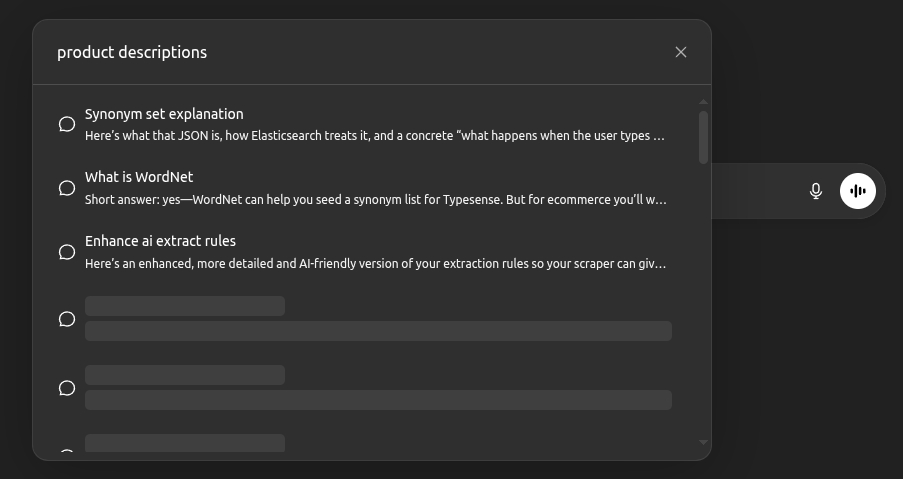
Some people keep everything in their ChatGPT history. Which works great until you realize you're scrolling through 100 conversations trying to find that one prompt from three weeks ago that actually worked. What's worse? The search function barely helps. You remember it was something about "product descriptions" but the search returns 12 conversations, and none of them is the right one.
Then the OpenAI forums are full of posts from people who lost access to their prompts after UI updates or can't find prompts they know they saved somewhere.
Others dump them in a Google Doc. I've seen these docs. They're 40 pages long, completely unorganized, with prompts just pasted one after another, with maybe a date if you're lucky.
Some people buy Notion templates for prompt management. I've seen these going for $50, $90, even more. Most are just basic databases you could build yourself in 10 minutes. The problem? Everything feels cramped. Tiny rows, truncated text, constant clicking just to read your own prompts.
Others use note-taking apps. Apple Notes, Notion, Obsidian, whatever. They start out organized with nice categories and headers. Then life happens, and a few weeks later, it's chaos. Prompts everywhere, no structure, and the search returns everything except what you actually need.
You see a great prompt online. Think "that's brilliant, I'll save that for later", and keep scrolling. When you need it later, it's nowhere to be found.
And plenty of people don't save anything at all. They just retype from memory each time. Which means every prompt is slightly different, and they have no idea why something worked yesterday but doesn't work today.
When It Actually Starts to Matter
For casual use, honestly, none of this matters much. If you're just asking ChatGPT random questions here and there, you don't need a system.
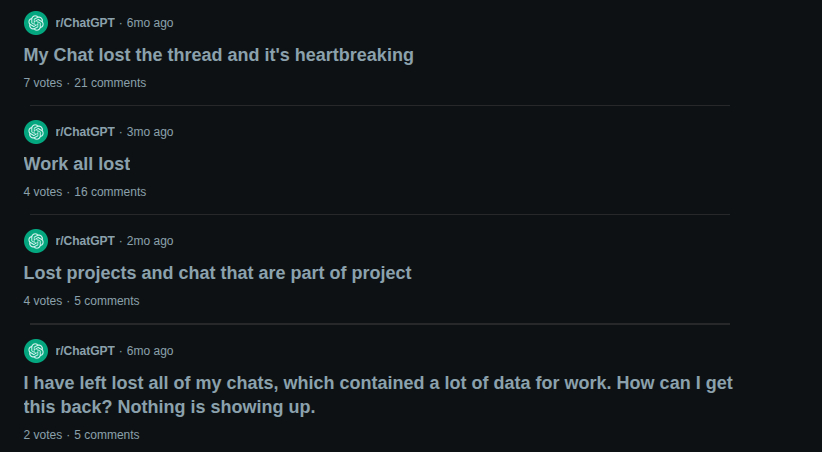
But I kept seeing the same pattern in r/ChatGPT. People lose entire chat histories. Prompts they spent hours crafting, gone. "Work all lost" posts are appearing regularly. That's when it starts to matter. When you've invested real time, losing it actually hurts.
In r/Midjourney, people constantly ask, "How do I find my old prompts?" because Discord channels move so fast that their prompts get buried in thousands of messages.
Three hours perfecting a prompt for consistent character art. It works beautifully. You generate a whole series. Then the ChatGPT conversation gets buried, you never save the prompt anywhere, and weeks later, you can't recreate that same consistency. Three hours of work, gone.
What People Actually Need
The people who seem to have this figured out aren't doing anything fancy. They just have a few simple categories that make sense for how they actually work.
The simple approach works better. Coding prompts in one place, documentation prompts in another, debugging prompts somewhere else. Three categories. That's it.
Nobody who actually uses AI regularly has 50 different categories with elaborate tagging systems. That's too much work. Most people stick to 3-5 broad categories based on what they actually do day to day.
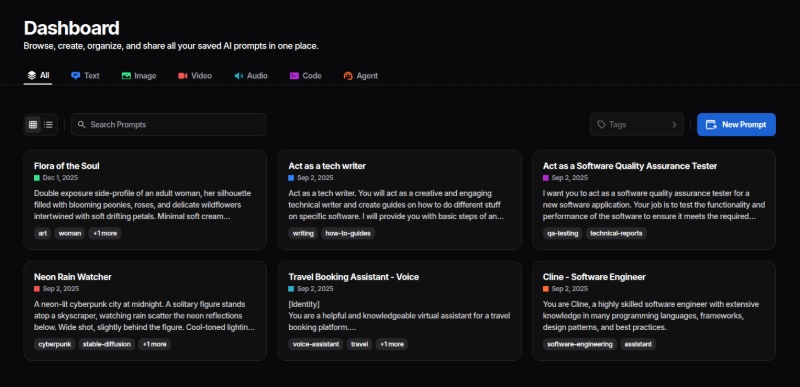
This is why tools like SpacePrompts focus on simplicity with broad categories, powerful search, and instant access. That's what actually works in practice.
But individual organization is only part of the story. Once you've got your prompts organized, you hit another wall: sharing them.
The Sharing Problem Nobody Talks About
Here's something I noticed that almost nobody mentions.
You craft a great prompt. Your coworker asks if they can use it. So what do you do? Copy it from wherever you saved it, paste it into Slack, and watch the formatting break into an unreadable mess?
Teams sharing prompts through email run into the same issue. Long, detailed prompts with specific instructions and examples arrive as walls of text that nobody wants to read.
Shared Google Docs technically works, but good luck finding the right prompt when you need it. And if two people edit it at the same time, things break.
The solution isn't revolutionary. Just a proper AI prompt organizer where prompts live in one place, and anyone can grab what they need with a quick search or a shared link.
How Do I Save My Best AI Prompts?
The people who succeed with organization don't start with a perfect system. They start by just saving the stuff that works.
When you create a prompt that gives you exactly what you need, save it right then. Don't wait. Don't tell yourself you'll organize it later. Just put it somewhere, anywhere, with a quick note about what it does.
Once you have 10-20 prompts saved, you'll naturally see patterns. You'll notice that half of them are for one type of task and the other half are for something else. That's when you add categories.
The simplest approach? Just mark your best ones somehow. Star them, highlight them, put them at the top. Whatever works. When you need something good, you know where to look first.
Why This Feels Different Now
A year ago, prompts were simpler. You'd ask for something, get an answer, and be done.
However, prompts are getting more complex now. People write elaborate system instructions with multiple examples, fine-tuned parameters, and chained prompts.
That's real work. That's experimentation and iteration. And when you've put in that effort, losing it actually hurts. It's not just about convenience anymore - it's about protecting work you've invested time into.
The Practical Reality
You don't need a complicated system or the perfect tool. You just need to stop losing the good stuff.
Simply put, when something works, save it. Make it searchable. Make it accessible when you need it. If you work with others, make it shareable without the formatting turning into garbage.
That's it. That's the whole thing.
Currently, across every AI community, people keep recreating the same prompts over and over. They keep asking, "Does anyone remember that prompt for X?" They keep losing work they spent hours perfecting.
It doesn't have to be that way. Your good prompts should be easy to find, reuse, and share. That's exactly why I built SpacePrompts. It's an AI prompt organizer designed specifically to solve these issues.
Ready to try it? Sign up for free - 10 prompts to start, and see if it solves your prompt chaos like it solved mine.